
Article
Ironman 70.3 Bike Pacing by Power
Pace the Ironman 70.3 bike leg at about 75–80% of FTP (IF 0.75–0.80) so you can still run well off the bike. Here's how to do it on power, hills and wind.
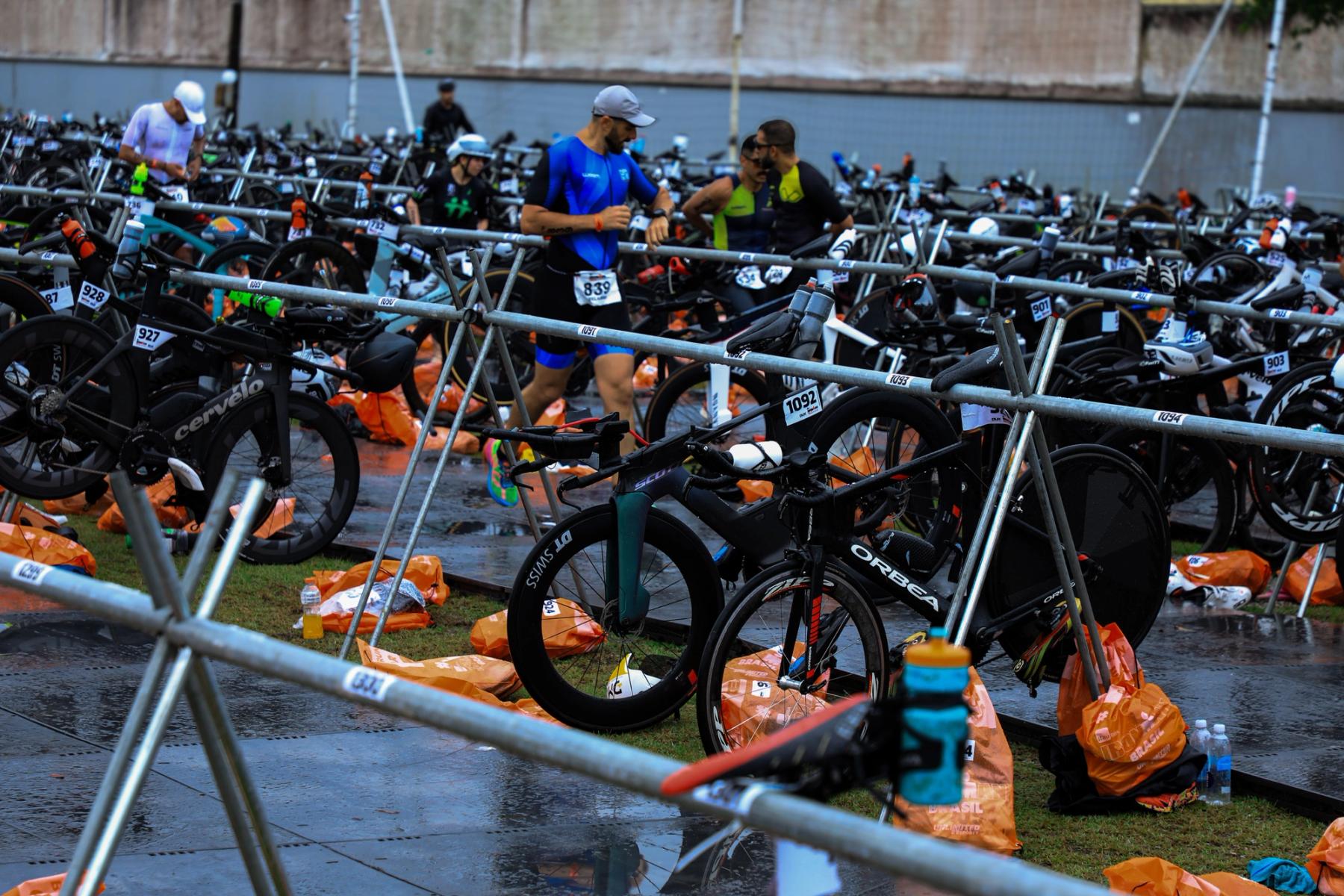
On an Ironman 70.3, pace the 90 km (56-mile) bike leg at roughly 75–80% of your FTP — an Intensity Factor of 0.75–0.80 — controlled enough that you can still run a strong half marathon off it. Overbiking is the most common race-ruining mistake in middle-distance triathlon: going harder on the bike almost always costs you more on the run than it saves on the road.
What power to target
For most age-groupers, aim for a Normalized Power around 75–80% of FTP (IF 0.75–0.80). Strong, experienced athletes with a big aerobic base can hold 0.80–0.85, while first-timers or anyone off limited training should sit nearer 0.70–0.75. Ride as evenly as you can — a flat power profile with a slightly negative split is far more efficient than surging — and keep your Variability Index close to 1.0.
Why you have to hold back
A 70.3 is won or lost on the run. Every match you burn on the bike comes out of your legs at the start of the half marathon, and the time you lose running easily dwarfs the time you gained pushing. Treat the bike as a controlled effort that sets up the run, not as its own race.
Pacing hills and wind
On climbs, let your power rise modestly but cap the surges — a brief spike to 110% of FTP is fine, a sustained 120% is not. Into a headwind, resist the urge to chase a number; hold your effort and accept the lower speed. On descents and tailwinds, keep pedalling smoothly rather than coasting. The goal is a steady Normalized Power, not a steady speed.
Fuelling the bike for the run
Take on 60–90 g of carbohydrate per hour on the bike and stay on top of hydration and sodium, especially in heat — the bike is your best chance to fuel for the run, because it's much harder to absorb calories while running. Practise your exact race nutrition in training so nothing is a surprise on the day.
How Stride helps you pace it
Stride's course power-planner takes the actual 70.3 bike course and your rider profile and computes a target power and expected time using gradient, your CdA and the day's wind, so you race to a number rather than a guess. It models your W′ balance so you don't overspend on the climbs, and the Stride AI Planner builds the multi-sport block that gets your bike and run ready together. Plan your 70.3 with Stride.
Frequently asked questions
- What power should I ride the Ironman 70.3 bike leg at?
- Most age-groupers should target a Normalized Power of about 75–80% of FTP (Intensity Factor 0.75–0.80). Strong athletes can hold 0.80–0.85; first-timers should sit nearer 0.70–0.75 to protect the run.
- What is a good Intensity Factor for a 70.3 bike?
- An IF of 0.75–0.80 is the sweet spot for most athletes — hard enough to be efficient, easy enough to run well off the bike. Above about 0.85 the risk of blowing up on the run rises sharply.
- How do I avoid blowing up on the run?
- Pace the bike conservatively (IF 0.75–0.80), ride evenly without big surges, and fuel 60–90 g of carbs per hour on the bike. Most run blow-ups are caused by overbiking, not by a lack of run fitness.
- How long does the 70.3 bike leg take?
- The 90 km bike usually takes most age-groupers 2.5–3.5 hours depending on course and fitness. A course power-planner can estimate your time from your target watts and the route profile.