
Article
How to Train for Long Climbs When You Live Somewhere Flat
No mountains nearby? You can still build the climbing fitness for Alpine cols. Here's how to train for long climbs when you live somewhere flat.
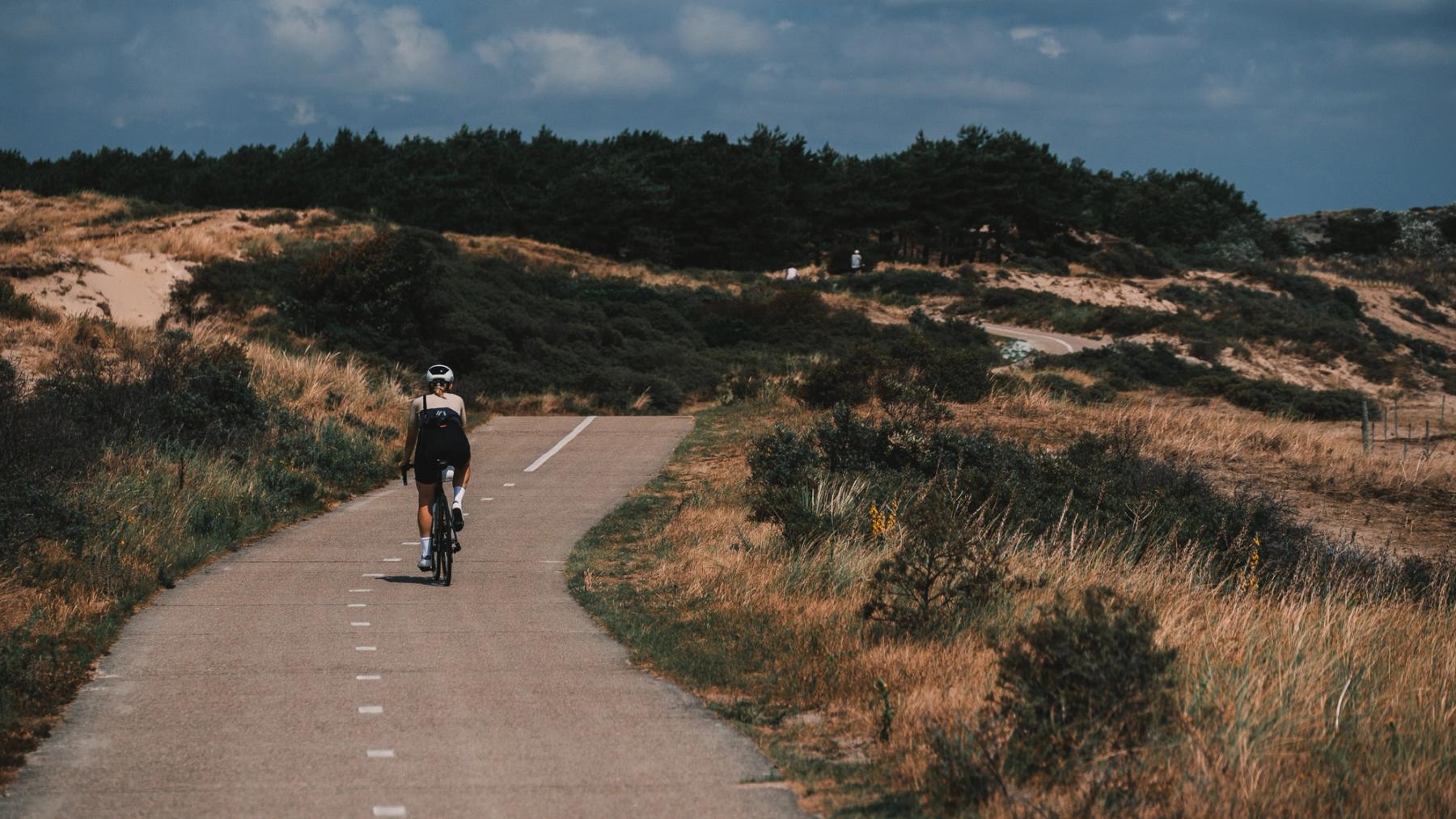
There is a particular kind of reckoning that happens about twenty minutes into your first Alpine col. You have trained through winter. You have done the long rides. You have ridden every decent hill within forty miles of home. And then the road tilts upward and simply does not stop, and you realise that nothing you did on a two-minute drag out of a roundabout has prepared you for this.
It is not a fitness problem, not exactly. It is a specificity problem. And the good news is that it is entirely solvable — even if you live somewhere flat.
Why Long Climbs Are a Different Physiological Challenge
Short climbs and long climbs look like the same thing on paper — both involve going uphill — but they train and test the body in meaningfully different ways.
A three-minute climb at the end of a local loop is mostly a high-intensity effort. You can go deep, recover on the descent, and repeat. A forty-five-minute Alpine col at 7% gradient is a sustained aerobic and muscular endurance challenge. The demand is not to go hard; it is to maintain a specific power output, manage heat, control pacing, and stay mentally composed for the better part of an hour — sometimes longer.
Most flat-country cyclists undertrain for the second thing while believing they are training for the first.
What to Do Indoors
The indoor trainer is the flat-country climber's most underused tool, and not just because it removes traffic and descents from the equation.
The key sessions are long, sustained efforts in the tempo and sweet spot range — think sixty to ninety minutes at 75–90% of FTP, with minimal interruption. These efforts simulate the sustained muscular and cardiovascular demand of a long climb far more accurately than short interval sets. The goal is not suffering through a hard effort; it is maintaining consistent power over time without fading.
ERG mode on a smart trainer is useful here. Locking in a target wattage and holding it for an extended block builds the kind of power discipline that Alpine pacing demands. It removes the instinct to push harder on a good patch and back off when it gets uncomfortable — both of which are expensive habits on a long climb.
This is also where the Stride AI Planner earns its keep. Rather than guessing at appropriate session intensity, Stride builds these blocks progressively into your training plan — calibrated to your current fitness, your event date, and the specific climbs you are targeting. The plan adapts as your fitness develops, which means the sessions stay productive rather than becoming either too easy or unnecessarily punishing.
Making the Most of What You Have Outside
Flat riders often dismiss their local terrain too quickly. A two-minute climb ridden once is not useful preparation. A two-minute climb ridden eight times at a controlled, sustained effort — with minimal rest between — starts to look a lot more like a long climb in terms of muscular demand.
Back-to-back repetitions on a short hill, holding a consistent power target rather than simply surviving each rep, are genuinely effective. The goal is to accumulate time at the right intensity, not to maximise gradient.
If you have access to a longer climb — anything over ten minutes — treat it as a learning environment for pacing discipline. Ride it slower than feels natural. Get comfortable with the sensation of effort that feels manageable at minute five and still feels manageable at minute thirty. That sensation is what you are training for.
The Pacing Mistake That Costs Most Riders Their Climb
The single most common error on a long Alpine col is going out too hard in the first ten minutes.
The lower slopes of most big climbs are gentler than the middle and upper sections. Riders feel fresh. The gradient is forgiving. The temptation to push is real. And so they push — and they pay for it somewhere around the forty-minute mark when their legs stop responding and the road still has another hour to offer.
Effective Alpine pacing means starting at an effort level that feels almost too conservative, and holding it. For most sportive riders, that means riding well within sweet spot for the early portion of a long climb, rather than pushing into threshold territory from the gun.
Stride accounts for this specifically. When your training includes col profiles from your target event, the Stride AI Planner can suggest target power ranges for each climb based on your fitness — so you arrive at the base of the Stelvio or the Alpe d'Huez with a number in mind, not just a vague sense of trying to pace yourself.
The Mental Side of Long Climbing
Sustained climbing is a psychological discipline as much as a physical one.
Short climbs have a built-in motivational structure — you can see the top, you can count down, you can suffer in the knowledge that it ends soon. A long climb offers none of that. There is no visible summit for much of the effort. The road bends, flattens slightly, then climbs again. The mental task is to stay present in the effort rather than projecting forward to where it ends.
Training this means practising it. Long indoor sessions without the distraction of descents or traffic build exactly this kind of sustained focus. Outdoor repetitions that demand consistency rather than just completion reinforce it further. The more time you spend in sustained effort without natural breaks, the more comfortable you become in that space — and the better you climb when it counts.
You Do Not Need Mountains to Climb Well
The Alps reward preparation, not geography. Riders who train specifically for sustained climbing — who spend time in tempo blocks, who practise pacing discipline, who build mental endurance through long unbroken efforts — consistently outperform riders who are simply fitter but less specific in their approach.
If you are preparing for an Alps or Dolomites trip and you are working with flat roads and limited time, the answer is not to wish for better terrain. It is to train smarter within the terrain you have.
Stride is built for exactly that kind of preparation. If you want a training plan that accounts for your specific target climbs, your current fitness, and the time you have available, start your free trial here.
Frequently asked questions
- Can you train for long climbs if you live somewhere flat?
- Yes. You can't fully replace gradient, but you can build the sustained, sub-threshold fitness long climbs demand using a smart trainer at a fixed gradient, long over-unders, big-gear low-cadence work and long endurance blocks. The Stride AI Planner builds these toward your target event.
- How do you simulate climbing indoors?
- Set your smart trainer to ERG or a fixed gradient and hold long, steady sub-threshold efforts at a lower cadence than usual, plus over-unders around threshold. These reproduce the muscular and aerobic demand of a long col without the hill.
- Do you need a power meter to train for climbs?
- It helps a lot. Climbing is paced by power, so a power meter or smart trainer lets you hold the right sustained effort — and lets Stride suggest target watts for each climb on your event.
- How long before an event should I train for climbs?
- Build climbing-specific fitness over the final 8–12 weeks on top of a solid endurance base. Stride periodises this automatically toward your event date.