
Article
The Durability Problem — Why Your FTP Lies When Racing Gets Hard
Your FTP is measured fresh, but races are won deep into the ride. Durability is the fitness that holds when you're tired — and why fresh-legs FTP lies.
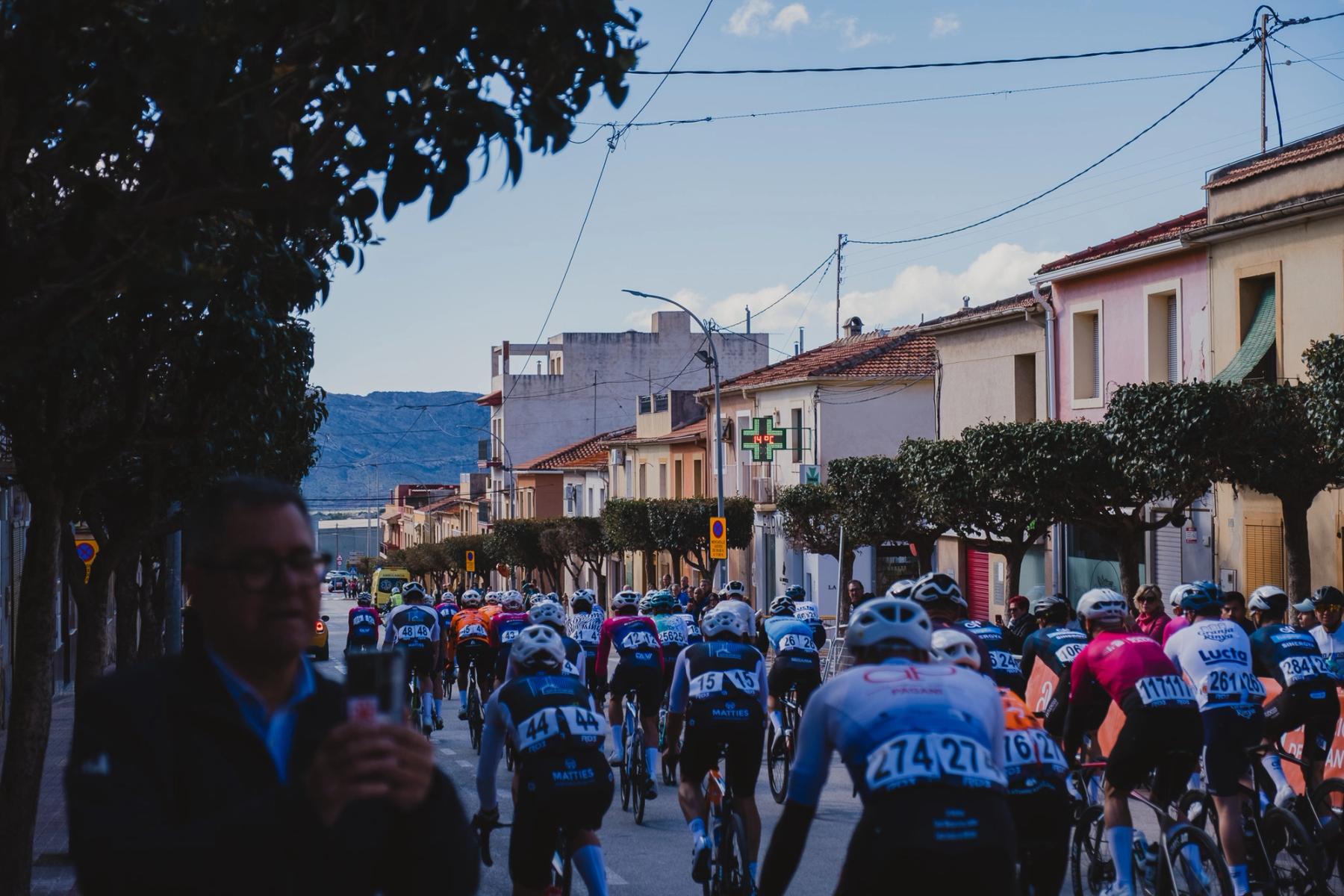
There's a number most cyclists know about themselves. It sits in their training app, their head, maybe their Strava bio. It's their FTP and it tells them, broadly, what they're capable of on a bike.
Mine is reasonably good. My training coming into Volta La Marina Stage 5 had been solid: consistent, structured, the kind of block where the numbers move in the right direction. I felt ready.
The race told me something different.
When a Hard Race Exposes You
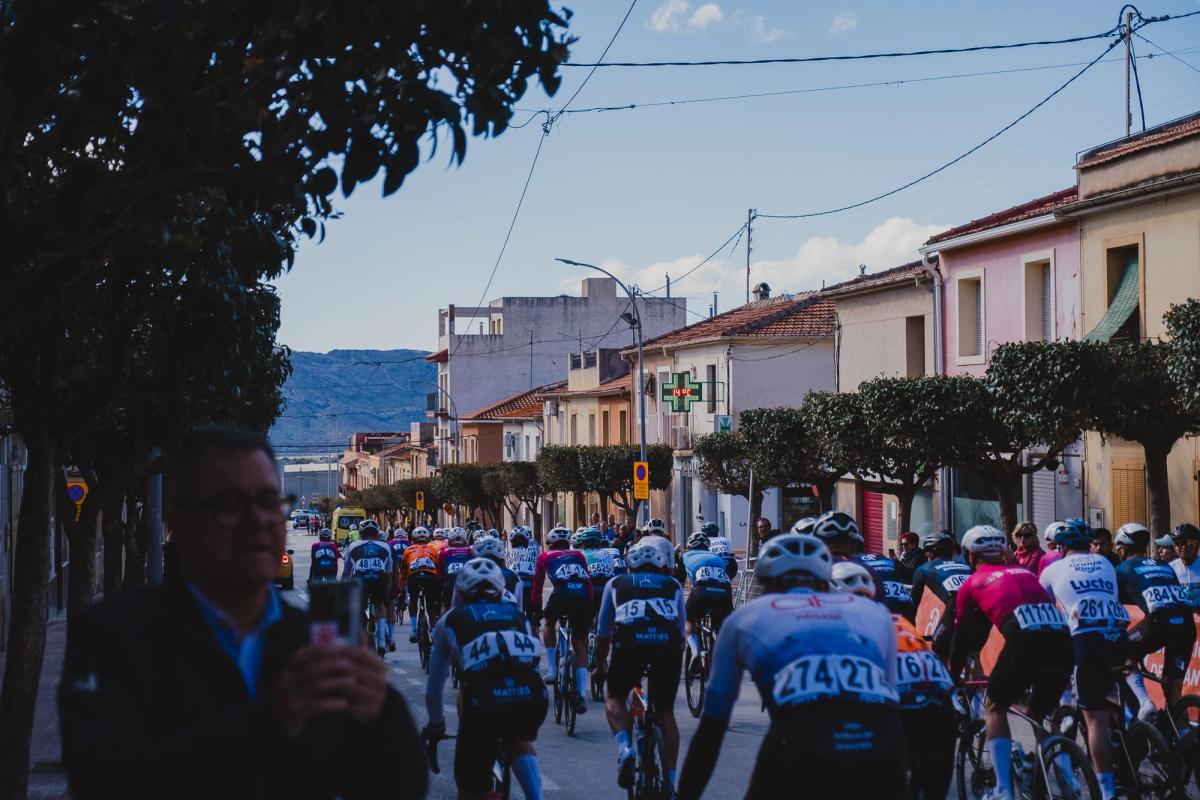
Volta La Marina is an amateur road race series held across the Alicanti region of Spain. Stage 5, held out of Agost on a Sunday morning in March, is the kind of race that goes hard from the gun. No neutralised roll-out. No easing in. Just pace, from kilometre one.
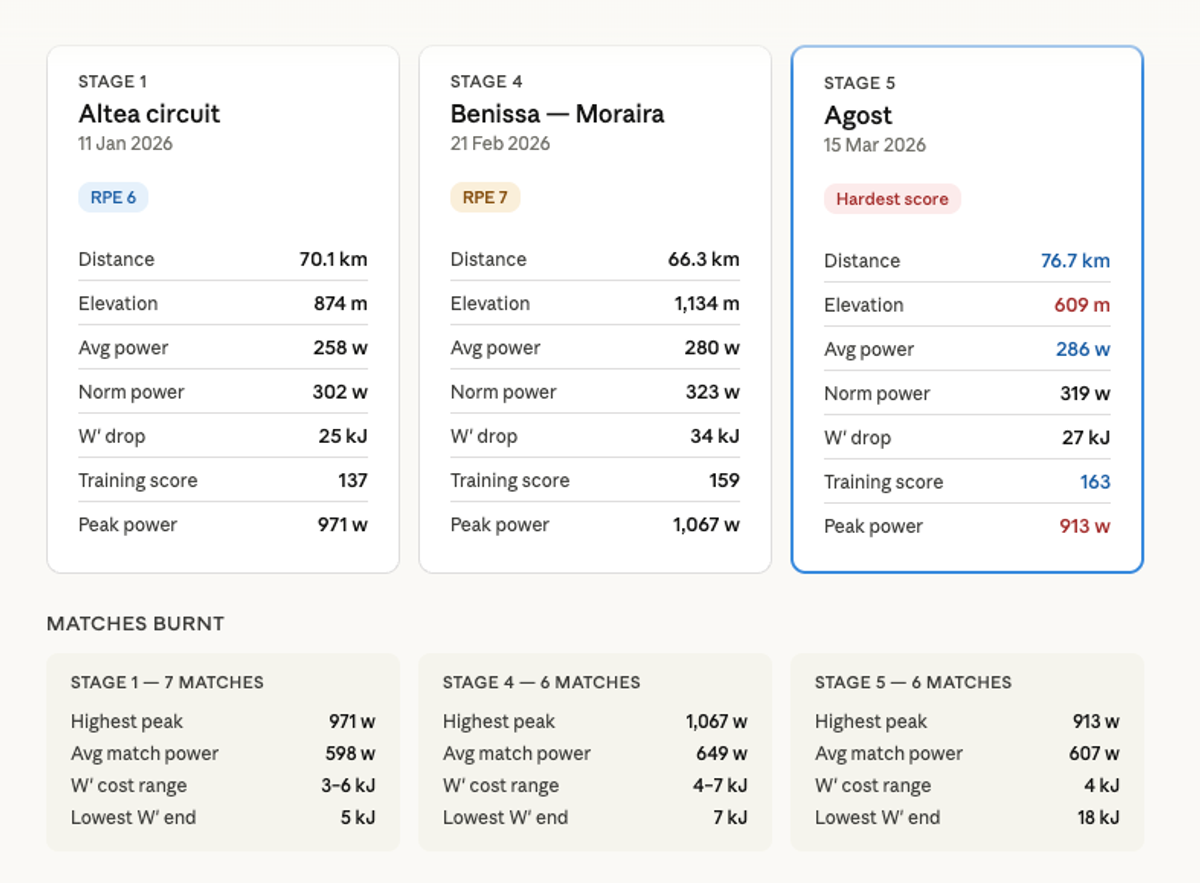
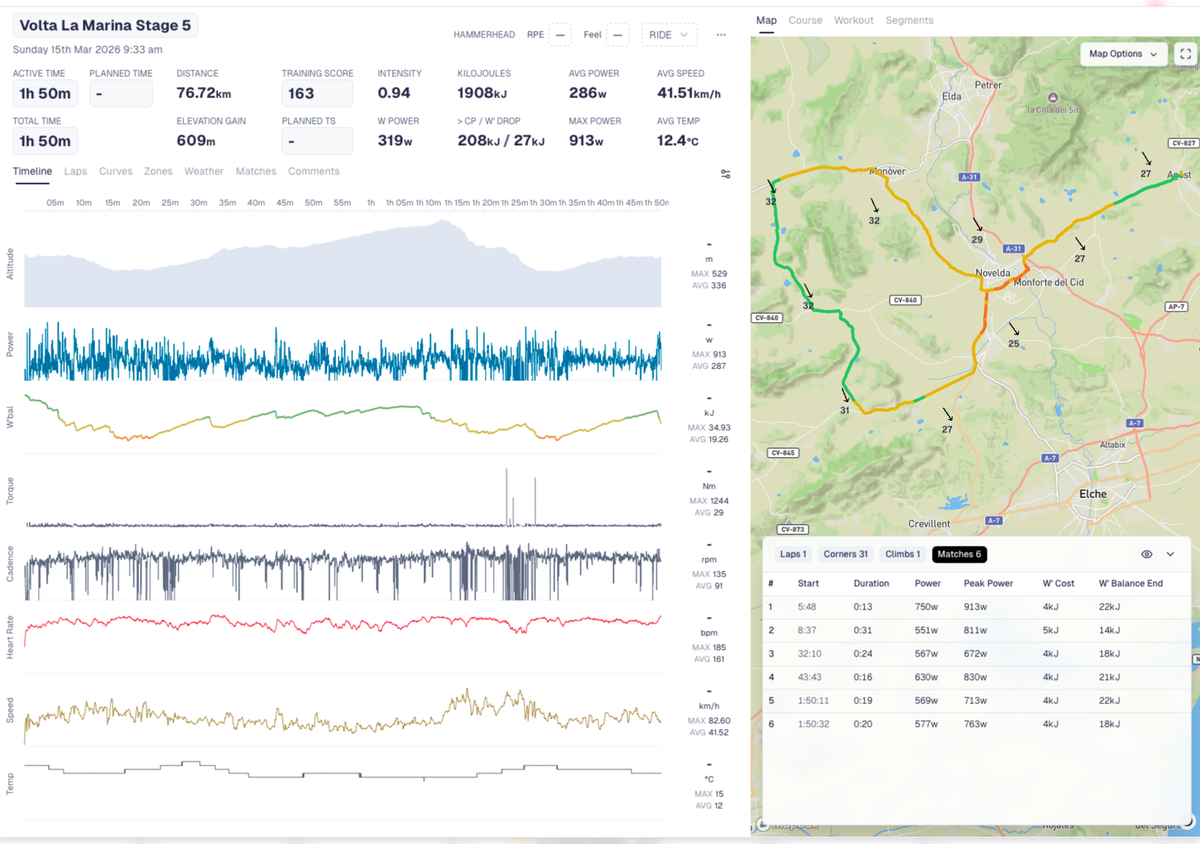
I came in fresh. Well-trained. The data backed it up: average 286 watts across 76 kilometres, normalised power of 319 watts, a training score of 163. On paper, a solid ride.
But in the final section of the race, something shifted. A gap opened on one of the last climbs. Myself and around 14 others had to burn hard on the descent to get back onto the main pack. We made it. But that effort cost something I didn't have the reserves to replace.
After that, the pace became unmanageable. I was pushing 450 watts and going nowhere. Not because I wasn't fit enough. Because the race had progressively depleted my ability to respond, and that one big effort tipped the balance.
This is the durability problem. And your FTP won't warn you about it.
What FTP Doesn't Measure
FTP is the cornerstone metric of structured cycling training. It's typically measured in a fresh state: a ramp test, a 20-minute effort, a carefully controlled protocol. It tells you what you can sustain for roughly an hour when you're rested, fuelled and ready.
What it doesn't tell you is what you can sustain after 90 minutes of hard racing. Or after repeated high-intensity efforts with incomplete recovery between them. Or in the final 20 minutes of a race that has been burning through your reserves since kilometre one.
That capacity, the ability to maintain power output as fatigue accumulates within a single effort, is called durability. And it's one of the most undertrained qualities in amateur cycling, largely because it's invisible in the metrics most of us track.
Look at the match data from Stage 5. Six efforts across the race, with peak powers ranging from 913 watts down to 577 watts. My W'bal, the measure of anaerobic reserve, was being drawn down throughout and not fully recovering between efforts. By the time that gap opened on the final climb, the tank wasn't empty. But the margin had gone. And in racing, margin is everything.
The W' Problem Nobody Talks About
Most cyclists know their FTP. Far fewer understand their W': the finite reserve of energy above threshold that powers every hard acceleration, every response to an attack, every effort to close a gap.
W' isn't just a number. It's a replenishment curve. After a hard effort, it recovers, but only partially, and only if the pace drops enough to allow it. In a race that stays consistently hard, that recovery never fully happens. Each effort draws the balance down a little further. The numbers on your head unit still look fine. The margin keeps shrinking.
By the time the crunch moment comes, whether that's an attack on a climb, a split in the bunch, or a gap that needs closing on a descent, you're not operating at your FTP. You're operating at whatever is left after the race has already taken its cut.
That's what 450 watts into a headwind with a fading W'bal actually feels like. Not a fitness problem. A durability problem.
How You Actually Train for It
The reason durability rarely gets trained is that it's hard to replicate in a normal training week. Single sessions don't create the sustained depletion that a hard race produces. So most athletes train around their FTP, build threshold, add some VO2 work, and assume the fitness will translate.
It does, to a point. But there's a layer beneath FTP that only reveals itself under sustained load: a layer that determines whether you can close a gap in the final 20 minutes or whether you're watching the bunch ride away while pushing numbers that would have been fine an hour earlier.
Training for durability looks different. It means longer rides at moderate intensity that teach the body to produce power in a fatigued state. It means back-to-back training days, deliberately, so your Sunday ride happens on Saturday's legs. It means tempo efforts late in long rides, not at the start. It means understanding your W' as a replenishment curve, not just a ceiling.
These are questions a good training plan should be asking. They're also questions that are genuinely difficult to answer without data and without a system that can read that data and adapt what comes next.
The Ceiling Isn't the Problem
I didn't crack at Volta La Marina Stage 5. I finished. But I rode the final kilometres knowing that a better-prepared version of me would have closed that gap, stayed with the bunch, and had something left for the finish.
The difference wasn't fitness. The fitness was there. The difference was durability: the ability to keep responding, keep producing, keep racing when the accumulated cost of a hard effort has quietly shrunk the margin to nothing.
FTP is the ceiling. Durability is whether you can get close to it when it actually matters.
Most training plans are built around the ceiling. The best ones account for what happens underneath it.
Stride builds training plans that adapt to how you're actually responding, not just what your FTP says you should be capable of. If you want to race stronger in the moments that matter, explore what Stride can do for you.
Frequently asked questions
- What is durability in cycling?
- Durability is your ability to hold power and efficiency deep into a long ride, after thousands of kilojoules of work — the fitness that decides hard races, which a fresh-legs FTP test never measures.
- Why does my power drop late in a ride?
- Fatigue erodes your sustainable power and raises your heart rate for the same effort (aerobic decoupling). The more durable you are, the smaller that late-ride drop-off.
- How do you improve durability?
- By training in a fatigued state now and then — efforts late in long rides and big back-to-back days — on top of a deep aerobic base. Stride tracks decoupling so you can see durability improving.
- What is aerobic decoupling?
- The drift in your power-to-heart-rate ratio over a long effort. A low figure means strong endurance; a high one means you're not yet durable. Stride computes it for your rides automatically.